EV Chargers & Solar Carport Efficiencies

The rapid expansion of the UK electric vehicle (EV) market is reshaping transport infrastructure and placing increasing pressure on local and national electricity networks. As EV adoption accelerates, ultra-fast EV charging and solar carport infrastructure are emerging as critical enablers of cost-effective, low-carbon transport decarbonisation.
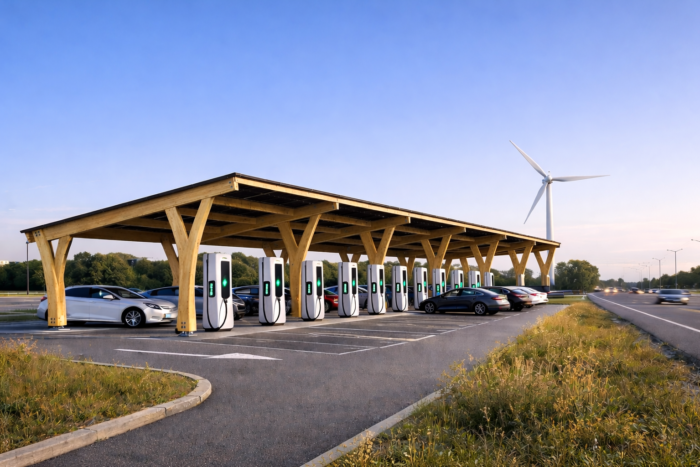
Ultra-fast EV chargers—typically rated between 150 kW and 350 kW—are now essential for motorway service areas, logistics hubs, commercial fleets and high-turnover public locations. At the same time, solar carports provide an efficient way to generate renewable electricity directly at the point of demand.
When integrated into a single energy system, ultra-fast charging and solar carports reduce operating costs, lower carbon emissions and ease grid constraints, delivering material benefits for site operators, users and the wider electricity network.
Ultra-fast EV charging enables vehicles to gain hundreds of miles of range in 10–20 minutes, making electric mobility practical for long-distance travel, taxis and commercial fleets. However, these chargers are highly energy-intensive and impose significant peak loads on local electricity networks.
For example, a single 300 kW ultra-fast charger can draw as much power as dozens of homes simultaneously. At scale, this creates challenges related to:
Without integrated energy solutions, ultra-fast charging hubs face high operational costs and increased exposure to grid constraints. This is where on-site renewable generation and intelligent energy management become critical.
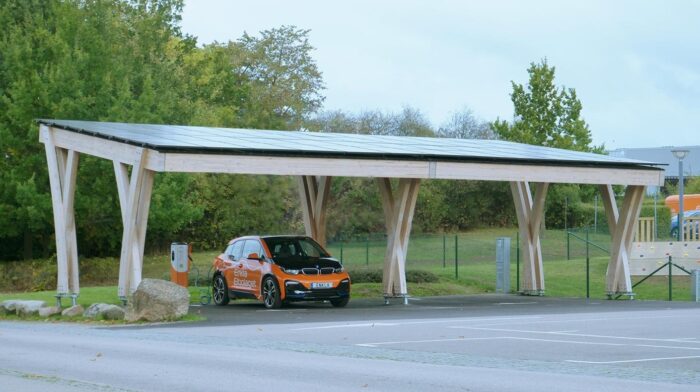
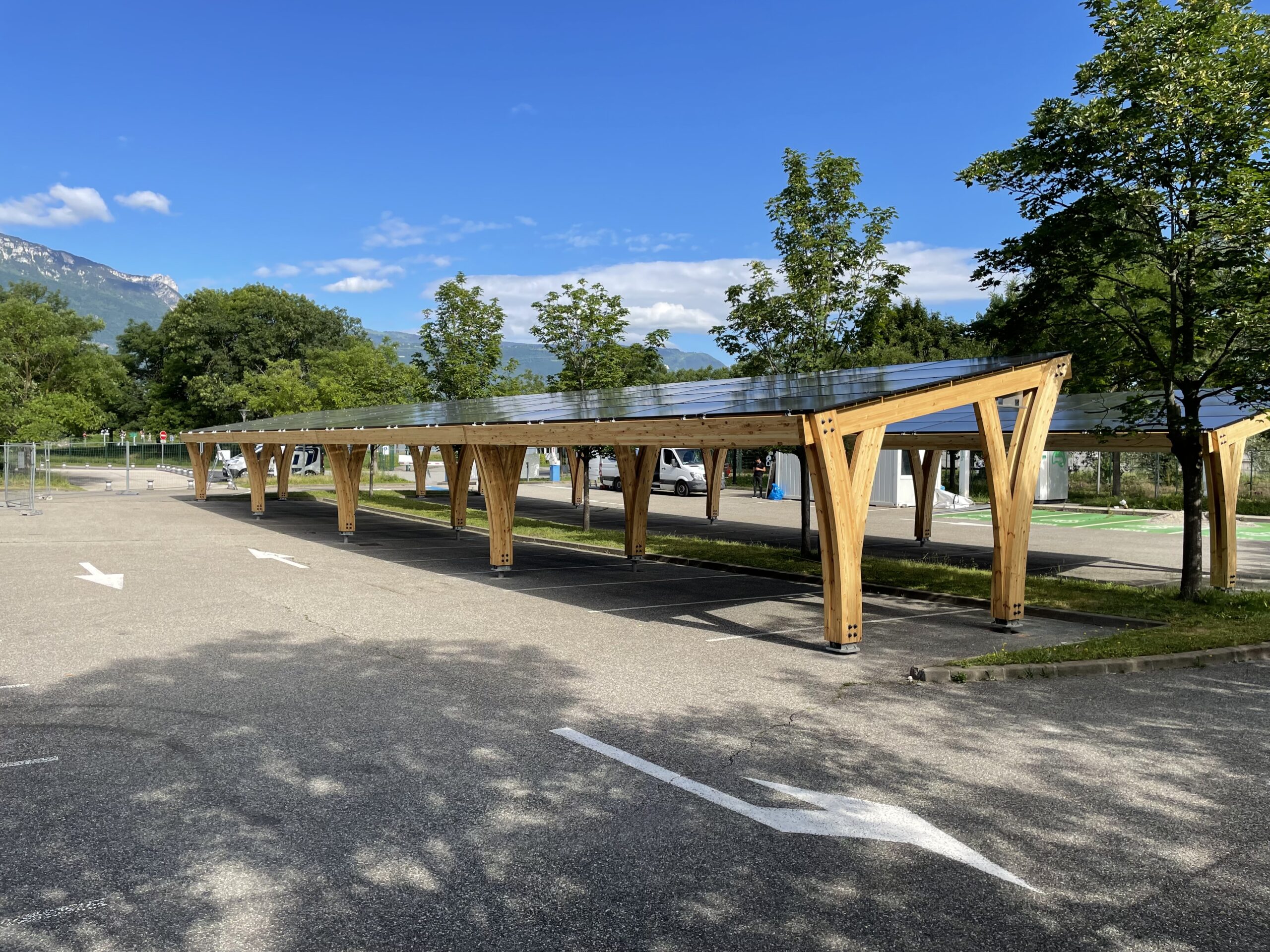
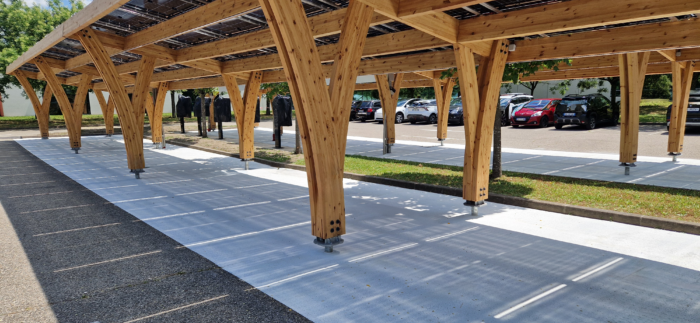
Solar carports provide a dual-use solution, combining vehicle parking with solar photovoltaic (PV) generation. Unlike ground-mounted systems, solar carports utilise existing paved areas, avoiding land-use conflicts and reducing planning risk.
Key benefits of solar carports include:
From a performance perspective, solar carports can be optimally oriented and tilted, often outperforming rooftop PV systems constrained by shading or structural limitations. In commercial and public environments—such as retail parks, workplaces, fleet depots and transport interchanges—solar carports can deliver large, contiguous PV arrays located directly adjacent to electrical demand.
Integrating solar carports with ultra-fast EV charging infrastructure unlocks several key efficiencies.
On-site solar generation supplies a portion of EV charging demand directly, reducing reliance on imported grid electricity. While solar alone cannot meet peak ultra-fast charging loads, it can significantly offset total energy consumption across a 24-hour cycle.
“
Ultra-fast charging and solar carports reduce operating costs, lower carbon emissions and ease grid constraints
Solar electricity generated on-site is typically cheaper than grid power, particularly during daylight hours. This reduces exposure to volatile energy prices and improves the commercial viability of high-power charging hubs.
When combined with battery storage and smart energy management systems, solar carports help smooth peak demand. Energy can be stored during periods of high solar generation and discharged during peak charging events, limiting maximum grid draw and avoiding costly network upgrades.
Ultra-fast charging partially powered by on-site renewables materially reduces lifecycle emissions, strengthening the environmental case for fleet electrification and supporting corporate and public-sector net-zero targets.
To achieve maximum efficiency, ultra-fast EV charging and solar carport systems must be designed as integrated energy solutions, rather than standalone assets.
Key design considerations include:
Well-designed integrated systems can defer or avoid grid reinforcement, accelerate project delivery and unlock additional revenue through flexibility and energy services.
DC-coupled architectures deliver significant technical and commercial advantages when integrating solar carports, battery storage and ultra-fast EV chargers.
Solar PV, battery storage and EV batteries all operate natively on direct current (DC). DC-to-DC systems avoid multiple AC/DC conversion stages typical of conventional charging infrastructure.
Quantitative impact:
Example (per MWp installed):
DC-to-DC architectures enable direct solar and battery support for 150–350 kW ultra-fast chargers, reducing peak grid demand.
Typical outcomes:
Battery systems respond in milliseconds, enabling:
Commercial impact:
“
DC-to-DC systems avoid multiple AC/DC conversion stages typical of conventional charging infrastructure.
A shared DC bus reduces the need for:
CAPEX impact:
Indicative benefit:
DC coupling allows solar energy to be:
Result:
DC-coupled systems are designed for:
Carbon reduction:
Ultra-fast EV charging is becoming a cornerstone of the UK’s transition to low-carbon transport. Its success depends on efficient, resilient and integrated energy infrastructure.
Solar carports convert car parks into productive renewable energy assets, delivering clean electricity at the point of demand. When combined with ultra-fast charging, battery storage and intelligent energy management, they deliver substantial cost savings, carbon reductions and grid efficiencies.
As EV adoption accelerates, integrated ultra-fast charging and solar carport systems will move from innovation-led solutions to standard features of future-ready transport infrastructure.
DC-to-DC ultra-fast charging combined with solar carports delivers higher efficiency, lower grid costs, improved charger performance and superior long-term returns, transforming EV charging from a grid-constrained load into a flexible, renewable-led energy asset.
To know more about how Pure energy (REGen) Ltd helps unlock commercially viable ultra-fast EV charging through integrated solar carports and smart energy systems, contact us on +44 (0)1382 657457 or email [email protected].
Services (UK/International)



The Future of Sustainable Outdoor Living Outdoor living is undergoing a qu...
The UK energy system is undergoing a structural shift. As the country acceler...
Turning Clean Energy Innovation into Bankable Projects The energy transiti...
Electric Vehicle Ultra-Fast Charging and Solar Carport Efficiencies Accele...

Securing UK Gas Supply While Scaling Up Clean Energy Managed Gas Transition ...
Independent Technical Due Diligence Site Visits for a Biomethane Project in L...